Open research

Papers, models, and datasets

Two papers accepted at NeurIPS 2026 workshops, released with the fine-tuned models and the data behind them. The simulations in both ran on NumericalAI.

Publications

Papers at NeurIPS 2026

One extends a PDE foundation model to new flow regimes without losing the old ones. The other tests whether solver configurations written by a language model compute the right physics.

  • NeurIPS 2026
  • Fluid dynamics · PyFR

Measuring and Mitigating Forgetting when Extending a PDE Foundation Model to Simulated Flow Regimes

Wasif Masood, Shoaib Noor · Empirisch Tech GmbH

NeurIPS 2026 Workshop on Representations for the Physical Sciences

Fine-tuning a PDE foundation model on a new flow regime works well. The open question is what it costs the regimes the model already knew.

We adapt Poseidon to two regimes that are absent from its pretraining data, wall-bounded flow past a circular cylinder and a compressible Kelvin–Helmholtz shear layer, then measure the error on its original families. Plain fine-tuning degrades all of them. LoRA and a frozen trunk still forget. Mixing a small share of the original data back into training resolves the trade-off.

  • Fine-tuning reaches 8.3× lower error on the cylinder regime than training from scratch, and matches the from-scratch accuracy in roughly 25× fewer updates.

  • LoRA trains 4% of the parameters and still raises the error on a pretraining family by 1.76×, close to the 1.83× of full fine-tuning.

  • Joint training adds both regimes at once and keeps all four tracked pretraining families between 0.63× and 1.16× of their original error.

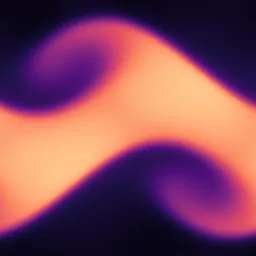
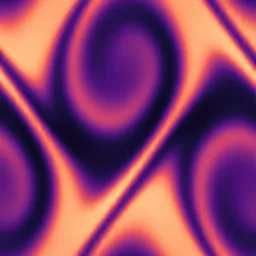
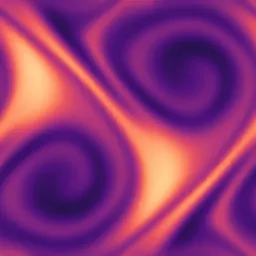
The two flow regimes added to the model

Vorticity field behind a circular cylinder at Reynolds number 180, showing a street of alternating vortices.

Cylinder wake, Re 180

Vorticity

clockwise

counter-clockwise
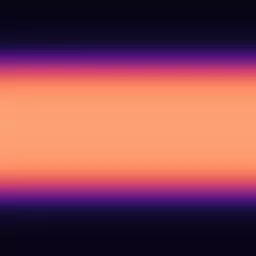
Kelvin–Helmholtz shear layer, Mach 0.32

Density

low

high

Rendered from the open dataset: cylinder/holdout/case_0029 and kh/holdout/case_0009.

Error on the original families after adding the cylinder regime

Relative to the unchanged Poseidon-B. Lower is better.

  • Fine-tuning only
  • With replay at weight 0.25
  • 1× = unchanged model

CE-Gauss

in replay buffer

CE-RP

in replay buffer

CE-CRP

held out of replay

CE-KH

held out of replay

0

1×

2×

Lead-2 NRMSE, mean of three seeds. CE-KH is shown for its density channel. Source: Table 2 of the paper.
  • NeurIPS 2026
  • Electromagnetics · Palace

Beyond Schema Conformance with Executable Verification for Scientific Configuration Repair

Wasif Masood, Shoaib Noor · Empirisch Tech GmbH

NeurIPS 2026 Workshop on AI for Verifiable Coding

A language model can write a solver configuration that validates, runs, and still simulates the wrong physics.

We test this on Palace, an open-source finite-element solver for computational electromagnetics. Each repaired configuration is graded at three levels: it matches the schema, the solver accepts it, and its numerical outputs reproduce a reference run. Fine-tuning, retrieval, and schema-guided repair all help, but far more at the structural level than at the numerical one.

  • Fine-tuning gives the largest gain: repairs that reproduce the reference rise from 8 to 26 of 54 on cases shipped with Palace.

  • Testing only on cases seen during fine-tuning overstates transfer. The full pipeline reproduces the reference on 63% of shipped-case tasks and 41% of newly authored ones.

  • Blind LLM judges do not consistently reproduce the execution-based labels, so they cannot stand in for running the solver.

One task from the benchmark: a slip in the length unit

parallel_plate.json

Perturbed
"Model": {
"Mesh": "mesh/parallel_plate.msh",
"L0": 1000.0reference: 1.0
},

Schema

Valid

Solver dry run

Accepted

Outputs against the reference run

Do not match

Task parallel_plate__unit_slip__s0. The perturbed file describes a geometry 1,000 times larger, yet it is still valid and still runs.

How far repairs get on newly authored cases

Share of 54 repair tasks that pass each check, with the fine-tuned model, retrieval, and one repair attempt.

Valid against the schema

89%48 of 54

Accepted by the solver

81%44 of 54

Reproduces the reference outputs

41%22 of 54

Each check includes the ones above it. The stock model passes 4% at every level. Source: Table 3 of the paper.
Fine-tuned models

Models from the papers

The checkpoints evaluated in each paper, with weights and model cards on Hugging Face.

Neural operator

Poseidon-B joint fine-tune

empirischtech/poseidon-b-joint-cyl-kh
  • CC BY-NC 4.0
  • Fluid dynamics · PyFR

Poseidon-B extended to two flow regimes it was never pretrained on, cylinder wakes and compressible Kelvin–Helmholtz shear layers, while its original families stay near their pretrained accuracy.

Base model
camlab-ethz/Poseidon-B, scOT with about 158M parameters
Training
Full fine-tune on both regimes with low-weight replay of two pretraining families
Input and output
(ρ, u, v, p) on a 128 × 128 grid, lead-time conditioned
Accuracy
NRMSE 0.018 on cylinder at lead 2, 0.0377 on the Kelvin–Helmholtz holdout
Retention
0.63× to 1.16× the pretrained error on four original families
License
CC BY-NC 4.0, inherited from Poseidon-B. Research use only.

Python

import torch
from scOT.model import ScOT  # from the Poseidon / scOT codebase

model = ScOT.from_pretrained(
    "empirischtech/poseidon-b-joint-cyl-kh"
).eval()

# x: one normalized state (rho, u, v, p), shape (1, 4, 128, 128)
# t: lead time k / 20 on the 21-frame cadence used in training
with torch.no_grad():
    pred = model(pixel_values=x, time=t).output

Normalize each channel with the statistics in norm_stats_used.json and undo it on the output. The model card has the full example.

Open on Hugging Face

QLoRA adapter

Qwen2.5-Coder-32B Palace LoRA

empirischtech/Qwen2.5-Coder-32B-Palace-LoRA
  • Apache 2.0
  • Electromagnetics · Palace

A QLoRA adapter that teaches Qwen2.5-Coder-32B to write and repair configuration files for Palace, the finite-element solver for computational electromagnetics.

Base model
Qwen/Qwen2.5-Coder-32B-Instruct
Training
QLoRA at rank 64 on 3,296 conversations built from Palace’s schema, documentation, and example configurations
Tasks
Writing a configuration from a description, and repairing a broken one
Solver version
Palace v0.14.0
License
Apache 2.0. The base model’s license also applies.

Shell

vllm serve Qwen/Qwen2.5-Coder-32B-Instruct \
  --enable-lora \
  --lora-modules palace=empirischtech/Qwen2.5-Coder-32B-Palace-LoRA \
  --max-lora-rank 64

Check every generated configuration. One can pass the schema and a dry run and still be physically wrong, so compare the outputs against a reference where one exists.

Open on Hugging Face
Open datasets

Data behind the results

The simulation trajectories and the repair benchmark, free to download and reuse under open licenses.

Simulation data

PyFR Cylinder & Kelvin–Helmholtz Flow Tensors

empirischtech/pyfr-cylinder-kh
  • CC BY 4.0
  • Fluid dynamics · PyFR

240 simulated trajectories of two 2D flow regimes, generated with the PyFR flux-reconstruction solver and resampled to a 128 × 128 grid for training and evaluating neural PDE surrogates.

Splits in the PyFR Cylinder and Kelvin–Helmholtz dataset
SplitCasesRange
cylinder/train150Re 62 to 179
cylinder/holdout30Re 180 to 190
kh/train50Mach 0.20 to 0.32
kh/holdout10Mach 0.32 to 0.35
Format
One NumPy array and one JSON metadata file per case
Tensor shape
(frames, channels, 128, 128): 41 × 4 for cylinder cases, 101 × 5 for Kelvin–Helmholtz
Size
About 3.9 GB
License
CC BY 4.0

Python

from huggingface_hub import snapshot_download
import numpy as np, json, glob

root = snapshot_download(
    "empirischtech/pyfr-cylinder-kh", repo_type="dataset"
)
paths = sorted(glob.glob(f"{root}/cylinder/train/*.npy"))
x = np.load(paths[0])  # (41, 4, 128, 128) float32
meta = json.load(open(paths[0].replace(".npy", ".json")))
print(x.shape, meta["channels"], meta["RE"])

The holdout splits sit just beyond the training range, at higher Reynolds and Mach numbers, so they test extrapolation.

Open on Hugging Face

Benchmark

Palace Configuration Repair Benchmark

empirischtech/Palace-Config-Repair
  • Apache 2.0
  • Electromagnetics · Palace

108 repair tasks for Palace configuration files, graded by running the solver. A repair counts only if it matches the schema, is accepted by Palace, and reproduces the reference outputs of the original case.

Subsets in the Palace Configuration Repair Benchmark
SubsetRowsContents
reference / ship3Configurations shipped with Palace v0.14.0
reference / new3Newly authored, held out from fine-tuning
perturbed / ship543 cases × 6 error classes × 3 variants
perturbed / new543 cases × 6 error classes × 3 variants
Includes
Meshes and Palace v0.14.0 reference outputs for grading
Size
About 15 MB
License
Apache 2.0

Python

from datasets import load_dataset

repo = "empirischtech/Palace-Config-Repair"
tasks = load_dataset(repo, "perturbed")  # splits: ship, new
refs = load_dataset(repo, "reference")   # splits: ship, new

12 tasks in each split change the mesh length unit, which the prompt alone cannot determine. Report results with and without them, as the paper does.

Open on Hugging Face

Simulated on NumericalAI

The flow data came from PyFR, the solver behind SRS. The electromagnetics references came from Palace, the solver behind CEM. You can run both today, starting at €1.

CMF

Multiphase/Multi-Fluid Compression

Buy on Azure Marketplace

CEM

3D Finite Element Electromagnetics

Buy on Azure Marketplace

SRS

Scale-Resolving Turbulence

SolverCloud

Open-source solvers in the cloud


Research: papers, models, and datasets

© 2026 NumericalAI, a product of Empirisch Tech GmbH. All rights reserved.

We use cookies to enhance your experience

We use cookies to provide essential functionality, analyze usage, and improve our services. Privacy Policy